
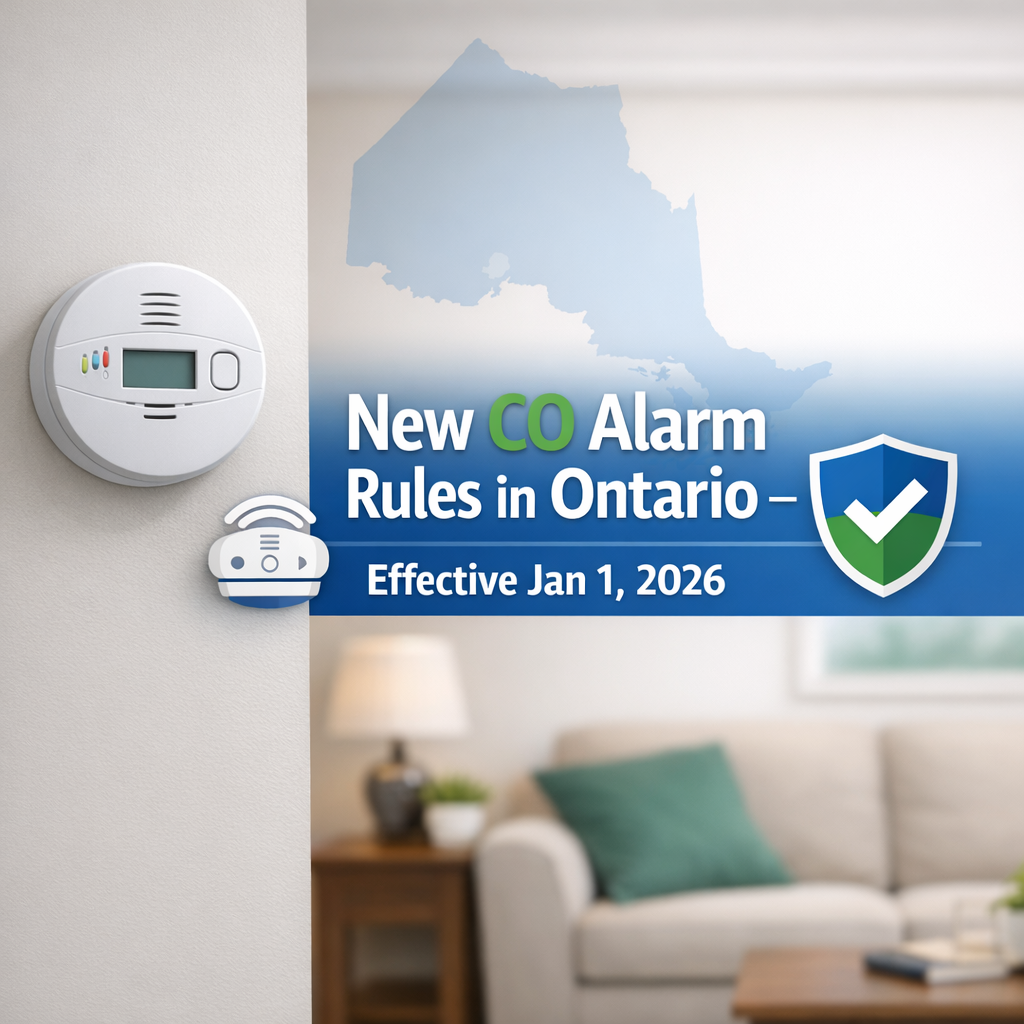
Effective January 1, 2026, Ontario introduced updated regulations for carbon monoxide (CO) alarms under the Ontario Fire Code. These changes aim to enhance safety in homes and multi-unit buildings across the province.
At Walker Inspections, we help homeowners and buyers stay compliant and safe. Our home inspection services in Cobourg, Belleville, Kingston and surrounding areas include checking CO alarm placement and other critical safety features.
What Changed?
Previously, CO alarms were only required near sleeping areas and only required in homes built since the requirment came into effect. The new standard expands coverage significantly:
- CO alarms are now required on every storey of the home, including basements and floors without bedrooms.
- Applies to all homes regardless of age with:
- Fuel-burning appliances (furnace, water heater, stove, etc.)
- Fireplaces
- Attached garages
- Heating air supplied from a fuel-burning appliance located outside the home.
Does This Apply to Older Homes?
Yes. These rules are not grandfathered. They apply to all existing homes and buildings, not just new construction.
- Existing Homes: Must comply by installing CO alarms on every storey.
- Multi-Unit Buildings: Suites adjacent to service rooms or garages also need alarms, regardless of age.
- No exemptions for older properties—the regulation was designed to improve safety across all dwellings.
Multi-Unit & Special Occupancies
Apartments, condos, hotels, motels, care facilities, and retirement homes have stricter requirements:
- CO alarms in suites adjacent to service rooms or parking garages.
- Service rooms themselves and some public corridors heated by fuel-burning systems.
Installation & Compliance
- Alarm Types: Hardwired, battery-operated, or plug-in units are allowed. Combination smoke/CO alarms are acceptable if certified.
- Certification: Must meet Canadian standards (CSA, ULC, ETL).
- Placement: Follow manufacturer instructions—typically on ceilings or high on walls, away from vents.
Who’s Responsible?
- Homeowners: Install and maintain alarms in owner-occupied homes.
- Landlords & Condo Boards: Ensure compliance in rental and multi-unit properties.
- Tenants: Must not disable alarms and report any issues promptly.
Penalties
Non-compliance can result in fines and enforcement actions, including administrative monetary penalties.
Why This Matters
Carbon monoxide is a silent killer—colorless, odorless, and deadly. These new rules are designed to save lives by ensuring every level of your home is protected. Although these mandates do not include bedrooms (unless a fuel burning appliance such as a fireplace is located there) it is a highly recommended location for CO alarm installation.